

Spark
Seeding innovation at the intersection of early learning, technology, and play.
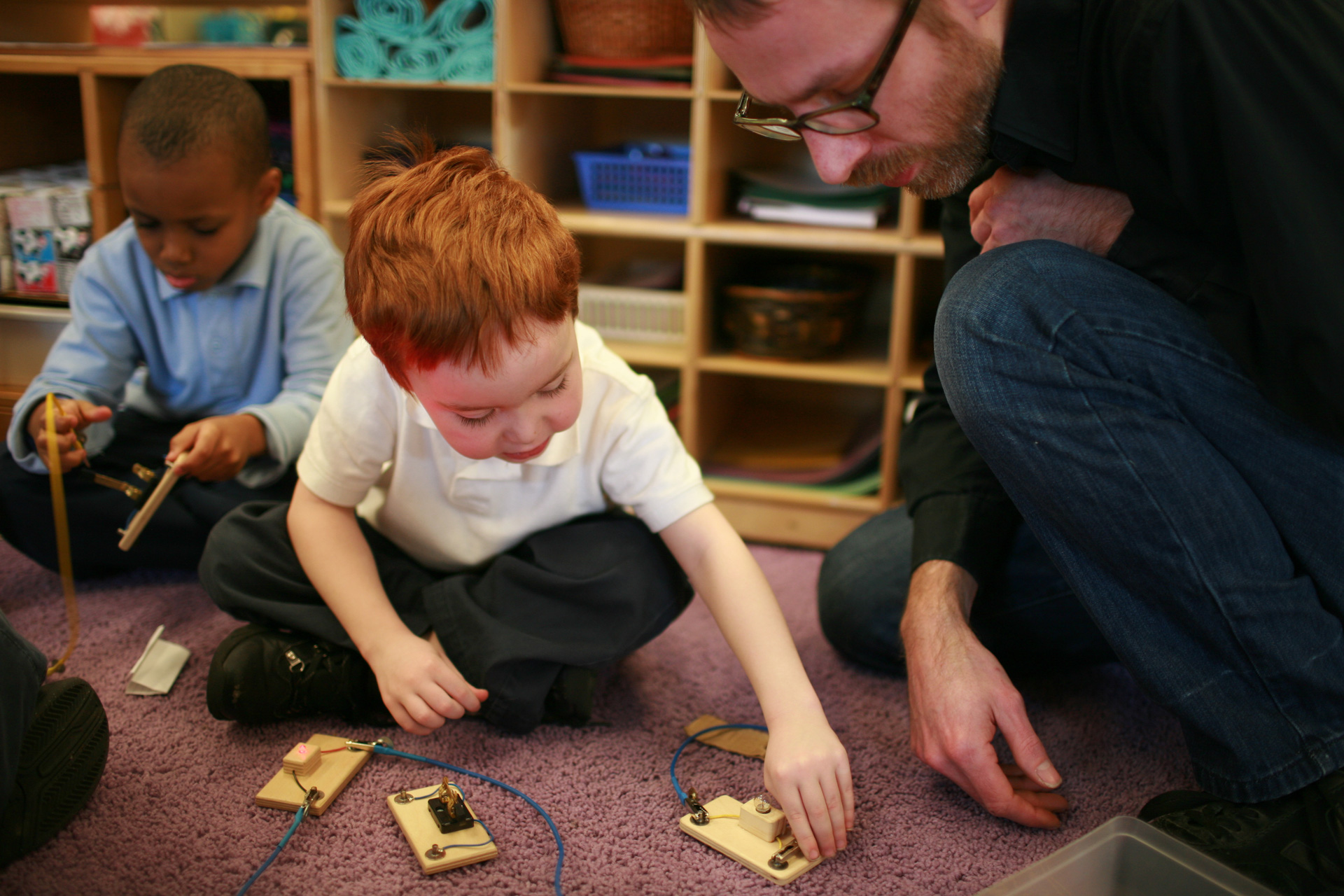
A young participant explores circuits through the Children’s Innovation Project, a Spark-funded project focused on inquiry, technology, and creative expression.
Allegheny Traditional Academy, February 2012 photo: Ben FilioSeeding innovation for Pittsburgh’s youngest learners
Launched in 2008 with major support from The Grable Foundation, Spark was created to address a critical opportunity: bridging the gap between Pittsburgh’s robust technology and media sectors and its early childhood education community. The program was designed to provide intentional opportunities for these distinct groups to interact, collaborate, and create new learning experiences for children from birth to age eight.
Spark operated as a dynamic, multi-year catalytic grantmaking program. It featured two primary funding streams: “Micro Spark,” an ongoing small-grant fund for emerging ideas, and “Super Spark,” an annual, larger-scale grant of up to $50,000 designed to support in-depth, collaborative initiatives.
The program’s process was deeply community-driven. All funding decisions were guided by a 16-member Spark Advisory Committee composed of leading professionals in technology, media development, early childhood education, and research, as well as active parents. This committee reviewed all proposals and made funding recommendations.
Beyond just funding, Spark’s central programmatic activity was the annual “Making Sparks” convening. This evening symposium served as the kick-off for each Super Spark funding round, bringing together hundreds of educators, technologists, artists, and researchers. Each year’s event explored a specific strategic focus—such as “Play” in 2009 and “Early Childhood Learning” in 2010—through panel discussions and facilitated ideation sessions that generated new project ideas.
Over its initial 2008–2011 grant period, Spark invested more than $600,000 into the region’s learning ecosystem. The program successfully seeded a critical mass of innovative projects and built a strong, collaborative network. The lessons learned from Spark were foundational, and in late 2011, the program model evolved from a sole focus on grantmaking into a comprehensive support structure for the entire Pittsburgh Kids+Creativity Network, which would soon become the globally recognized Remake Learning network.
Program In Brief
Years Active
2008–2012
Total Investment (2008-2011)
$605,142
Initial Grant Support
$900,000 from The Grable Foundation (2008-2011)
Total Micro Spark Projects (2009-2011)
23
Total Super Spark Projects (2009-2011)
8
Advisory Committee Members
16
Making Sparks Attendees (2009)
180+
Making Sparks Attendees (2010)
~90
Making Sparks Attendees (2011)
~80
Making Sparks
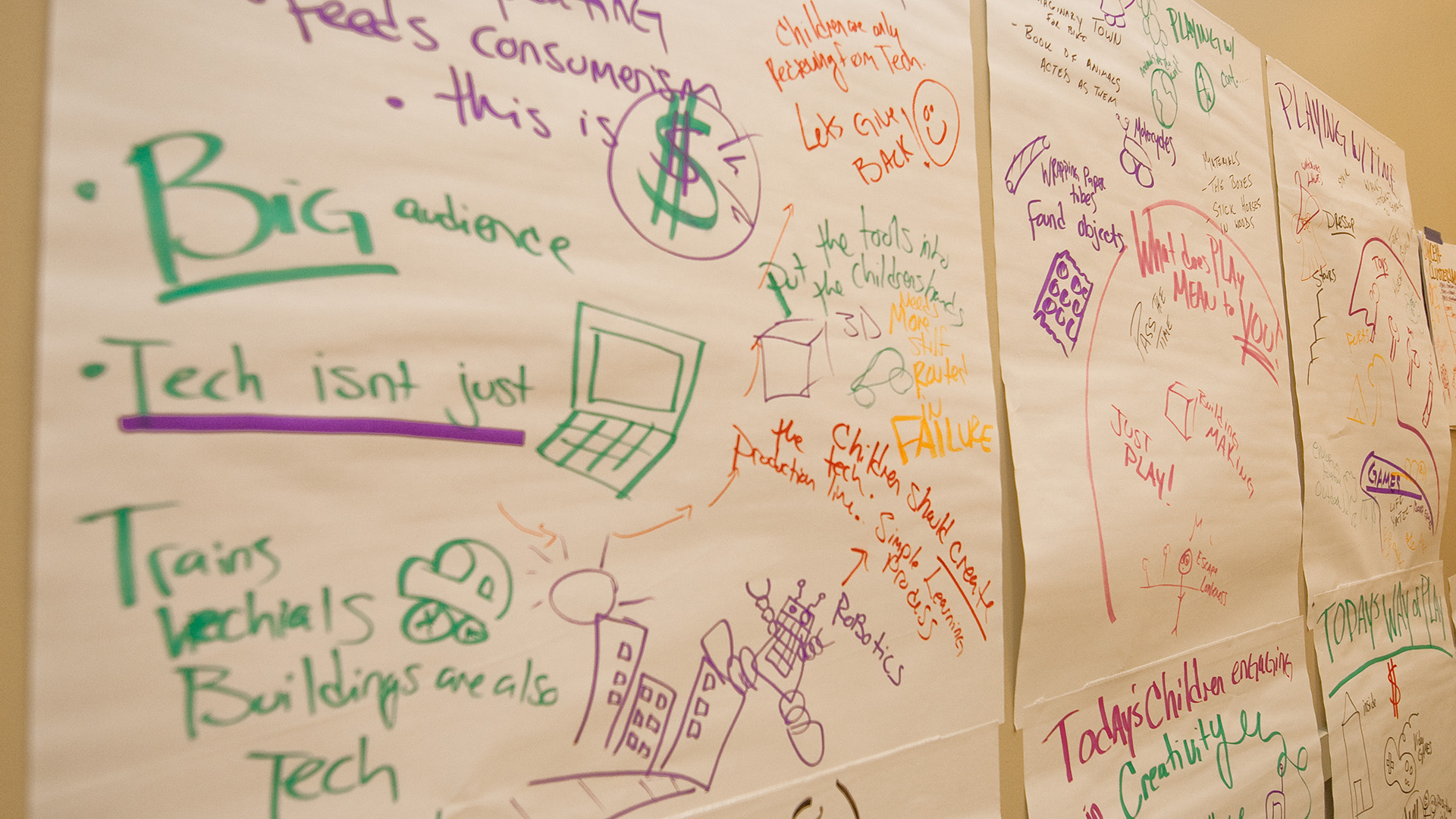
Sprout hosted an annual forum that brought together parents, teachers, educators, and researchers. They discussed innovative approaches in early childhood education and how to leverage technology and new media to enhance learning for children ages birth to age eight.
Funded Project Highlights
Spark supported a diverse portfolio of projects that ranged from small-scale prototypes to large, institutional initiatives.
Spark 2009

Digital Toys for Math Literacy
Providing a low-cost, kid-friendly object with embedded electronics that enables young children and their parents to imagine, explore and learn mathematical concepts together.
Digital Toys for Math Literacy
$12,000, 2009 Spark project support
Digital Toys for Math Literacy, a project of Propel Schools, was a low cost, kid-friendly object with embedded electronics that enabled young children and their parents to imagine, explore and learn mathematical concepts together. Developed in partnership with Sima Products, the toys could be linked together into multiplayer games challenging kids to use fundamental arithmetic and problem solving skills.
Message from Me!
Creating a kiosk prototype that interactively combines digital photography and sound to enable young children to better communicate with parents about their daytime activities.
Message from Me!
$15,000, 2009 Spark project support
Message from Me!, a project of Carnegie Mellon’s CREATE Lab, was a kiosk prototype that interactively combined digital photography and sound to enable young children to better communicate with parents about their daytime activities at childcare centers by using custom-built age-appropriate interfaces to record and share their daily experiences.
RePlayMyPlay
Developing an energy-harvesting play exhibit at the Carnegie Science Center that converts the mechanical energy from the motion of children’s play into electric power.
RePlayMyPlay
$14,000, 2009 Spark project support
RePlayMyPlay, a project of Deren Guler, was an energy-harvesting play exhibit at the Carnegie Science Center that converted the mechanical energy from the motion of children’s play into electric power.
Spark 2010
Character Therapy
Engaging children living with Autism Spectrum Disorders in emotional and communication therapy using Popchilla robot devices.
Character Therapy
$13,070, 2010 Spark project support
Character Therapy, a project of Interbots, was a program at the Autism Center of Pittsburgh that used Popchilla robot devices to engage children living with Autism Spectrum Disorders in emotional and communication therapy.
ReefBot
Finding, recording, and identifying marine life in a coral reef habitat with a remote-controlled submersible robot with on-board fish recognition technology that swims in the PPG Aquarium’s Ocean Tank.
ReefBot
$50,000, 2010 Spark project support
ReefBot, a project of Pittsburgh Zoo & PPG Aquarium, was a remote controlled submersible robot with on-board fish recognition technology that swam in the PPG Aquarium’s Ocean Tank. Interactive controls and multimedia display allowed children to navigate the robot, find, record, and identify marine life in a coral reef habitat.
White Light
Projecting optical patterns of additive color mixing and other properties of light as children interact with the touring video sculpture.
White Light
$15,000, 2010 Spark project support
White Light, a project of Amanda Long, was a touring video sculpture composed of red, green and blue animations. As children interacted with it, the projections formed optical patterns of additive color mixing and other properties of light.
Spark 2011
Children’s Innovation Project
Producing an electric circuitry components kit designed to engage young children in broad interdisciplinary learning, with a focus on creative exploration, expression, and innovation with technology.
Children’s Innovation Project
$44,200, 2011 Spark project support
Children’s Innovation Project, a project of CREATE Lab, produced a kit of electric circuitry components designed for young hands to engage young children in broad interdisciplinary learning, with a focus on creative exploration, expression and innovation with technology. Using the kit to hack and remix familiar electrical devices, Children made connections to objects in their world through disassembling toys, identifying and then re-purposing and reconfiguring their internal components into new inventions.
Hello Robo!
Leading hands-on robotics activities in 131 Head Start classrooms in Allegheny and Westmoreland Counties and at Family Science Events.
Hello Robo!
$49,502, 2011 Spark project support
Hello Robo!, a project of the Carnegie Science Center, introduced robotics in 131 Head Start classrooms in Allegheny and Westmoreland counties and at Family Science Events at the Science Center. During classroom visits, Carnegie Science Center staff educators led hands-on activities to help students build and use simple robotic kits they were then able to keep to utilize in other lessons throughout the school year.
Spark 2012
Clay Case
Providing all the materials, tools, and tips for families to create with clay along the access to Union Project’s studio to have their work fired, get a Clay Case refill, and see artists at work in a community studio.
Clay Case
$10,000, 2012 Spark project support
Clay Case, a project of Union Project, was a clay kit for families to do together at home. This studio-to-go included all the materials, tools, tips, and inspiration to create and learn with clay. After the making, families could bring their creations to Union Project’s studio to be fired, get a Clay Case refill, try the potter’s wheel, and see artists at work in a community studio. The Sprout Fund support made it possible to develop this product and give away 200 kits and begin sales of 100 kits to Pittsburgh families. Other Clay Case supporters included Standard Ceramic Supply and Whole Foods Market.
Dream Flight Adventures Playtesting
Creating a playtesting program for non-profit and for-profit partners to prototype their educational products and activities with children and families in the Museum’s MAKESHOP.
Dream Flight Adventures Playtesting
$10,000, 2012 Spark project support
Dream Flight Adventures Playtesting, a project of The Children’s Museum of Pittsburgh, developed a playtesting program for nonprofit and for-profit partners to prototype their educational products and activities with children and families in the Museum’s MAKESHOP. The Children’s Museum developed a sustainable, revenue generating playtesting service that provided potential clients with high-quality feedback from the Museum’s child and family audience regarding the functionality and effectiveness of their product. To implement the project, the Children’s Museum shared its own expertise designing learning-rich, deeply engaging experiences for children and families, while at the same time providing access to MAKESHOP, a one-of-a-kind space where children and families engaged in DIY (do-it-yourself) projects with traditional and digital tools, materials, and processes. By using MAKESHOP as the site for the new playtesting services, playtesting clients had access to a valuable, technology-rich learning environment that catered to children of all ages and demographics.
Sea Land & Air Challenge
Developing an interest in engineering concepts through competitive, fun activities is a powerful way to expose students to STEM career pathways.
Sea Land & Air Challenge
$15,000, 2012 Spark project support
Sea Land & Air Challenge, a project of Pennsylvania State University Electro Optics Center (EOC), used the EOC’s expertise in unmanned sensor systems to provide the next generation of engineers and technicians hands-on experience with engineering technologies. The project used competitive, fun activities as a powerful way to expose students to STEM career pathways and helped develop an interest in engineering concepts. It additionally provided regional high school students with experience in the design, integration, and testing of sensors (e.g. cameras, temperature sensors, GPS) of remote control vehicles. Student interaction with engineering mentors exposed students to a ‘real-world’ engineering process and helped incorporate scientific skills with hands-on experience. The experience inspired students to pursue STEM education and opened a doorway to a wide range of educational and career opportunities.
Making Sparks Convening
A central component of the Spark program was the “Making Sparks” annual symposium. This event was designed to energize participants, seed new collaborations, and generate project ideas for the annual Super Spark funding round. Each year’s event was built around a specific strategic theme, including “Play” (2009), “Early Childhood Learning” (2010), and “Creativity in Early Childhood” (2011).
Key activities at each convening included:
Panel Discussions
Featured presentations from regional and national leaders on emerging trends in technology, media, and childhood development.
Ideation Sessions
Participants broke into small, facilitated groups to brainstorm new project ideas responding to the year’s theme. Ideas were often captured by graphic facilitators.
Project Pitches
The ideation sessions concluded with groups pitching their best ideas to a panel of judges and other attendees.
Applicant Workshops
Following the event, Sprout staff hosted workshops to help potential applicants develop their Super Spark proposals and connect with partners.
Documentation & Promotion
Sprout documented the ideas, photos, and videos from the events and published comprehensive reports on the Spark website to share the learnings with the entire community.
Related Programs
Remake Learning
Spark was a foundational program that helped build the community and framework for what would become the Remake Learning network (formerly the Kids+Creativity Network).
Hive Pittsburgh
This program, which focused on connected, out-of-school learning, was a direct evolution of the network-building principles established by Spark.
Acknowledgements
Thank you to all those who made this program possible!
Supporters
- The Grable Foundation
Partners
- Pittsburgh Association for the Education of Young Children (PAEYC)
- Saturday Light Brigade
- Pop City Media / Kidsburgh
Staff
- Jocelyn Horner 2008-2009
- Ryan Coon
- Mac Howison
- Dustin Stiver
- Matt Hannigan
- Cathy Lewis Long